Navigating Post-Secondary Education in Canada: What You Need to Know
By James Whitmore · · 9 min read
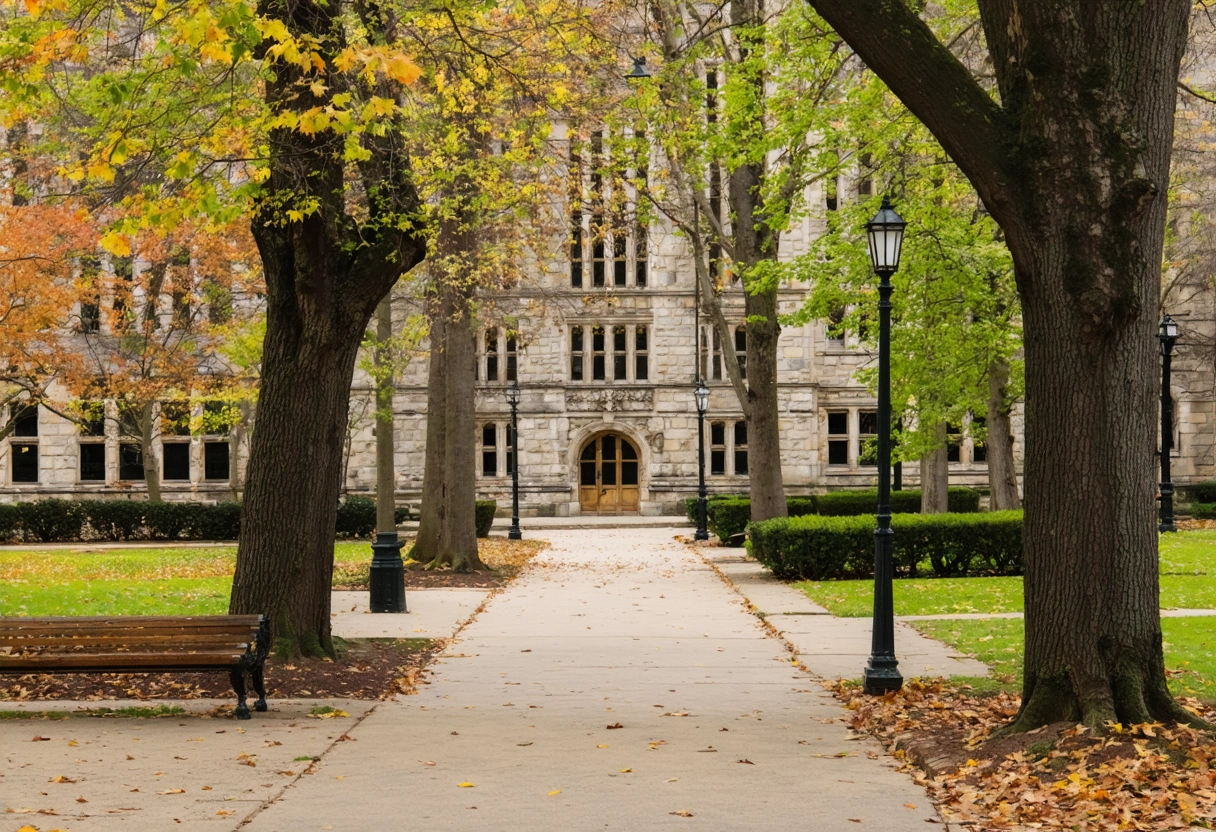
Canada's post-secondary education landscape is diverse, decentralised, and navigable — with the right framework for understanding it.
What are the main types of post-secondary institutions in Canada?
Canada's post-secondary system includes several distinct types of institutions, each with a different focus and credential outcome.
Universities offer bachelor's, master's, and doctoral degrees across a broad range of academic disciplines. They are research-intensive institutions that combine undergraduate education with graduate studies and faculty research programmes. Canada has over 100 degree-granting universities, ranging from large research-intensive institutions like the University of Toronto, McGill University, and UBC to smaller liberal arts universities that prioritise undergraduate teaching.
Colleges (and their provincial equivalents, including institutes of technology and CEGEPs in Quebec) typically offer two- and three-year diploma and certificate programmes, as well as some applied degree programmes. They are oriented toward practical, career-specific training in fields including healthcare, business, technology, trades, and design. The distinction between colleges and universities has blurred somewhat in recent years, with many colleges now offering applied bachelor's degrees and university-college hybrids becoming more common.
Trades and vocational training is offered through colleges, private career colleges, and apprenticeship programmes administered by provincial governments. The apprenticeship system — which combines classroom training with supervised on-the-job experience — is the pathway into Red Seal trades including electrician, plumber, carpenter, and automotive technician, among many others.
Understanding which type of institution and programme aligns with a specific career goal is the essential first question.
How does student financial aid work in Canada?
Student financial aid in Canada operates through a combination of federal and provincial programmes, with some variation between provinces.
The Canada Student Grants and Loans programme, administered by the federal government through Employment and Social Development Canada, provides grants (which do not need to be repaid) and loans (which do) to eligible students in financial need. Eligibility is assessed based on family income, number of dependants, and the cost of the programme being attended.
Provincial student aid programmes supplement federal support, with amounts and eligibility criteria varying by province. Ontario, British Columbia, and Quebec all operate substantial provincial aid systems alongside the federal programme.
Key points for students navigating financial aid:
- Apply early. Most aid programmes have application deadlines well before the academic year begins.
- Grants are prioritised where possible — the shift in federal policy toward more grants and fewer loans over the past several years means that many low- and middle-income students now receive a larger proportion of their aid as non-repayable grants.
- Repayment assistance programmes exist for graduates who struggle to repay their loans after graduation.
What is the difference between a diploma and a degree?
The distinction matters in terms of both the credential itself and its recognition by employers and other institutions.
A degree — typically a bachelor's degree requiring three to four years of full-time study — is issued by a university and confers a higher level of credential recognition in most professional and graduate study contexts. Many regulated professions (law, medicine, engineering, teaching) require a degree as a minimum qualification.
A diploma — typically requiring one to three years of study — is issued by a college or institute and is oriented toward practical competency in a specific field. In many sectors, a college diploma is the relevant and sufficient credential for entry-level employment.
An applied degree is a newer category: a four-year degree delivered by a college, combining academic study with applied and practical components. These have grown in prominence in fields including business technology, culinary arts, and applied science.
The right credential depends on the intended career pathway. For many technical and vocational careers, a college diploma provides a faster and more direct route to employment. For careers requiring research, professional licensure, or graduate study, a university degree is typically the appropriate foundation.
How is post-secondary education regulated in Canada?
Post-secondary education in Canada is a provincial responsibility. Each province and territory regulates its own institutions, approves credentials, and sets funding frameworks.
This decentralisation means that credential recognition can vary across provincial lines. A professional designation earned through a programme in one province may require additional assessment or examinations to be recognised in another — a known challenge for professionals who move between provinces, and one that federal and provincial governments have been working to address through interprovincial mobility agreements.
For internationally educated professionals, credential recognition is a significant and often complex process. Most provinces have assessment bodies for internationally educated professionals in regulated fields (engineering, nursing, teaching, etc.), and the process and timelines vary considerably by profession and province.
What should I consider when choosing a programme?
Choosing a post-secondary programme involves several dimensions beyond the credentials on offer.
Career alignment: Does the programme provide the specific knowledge, certification, or credential required for the intended career? Some fields (healthcare, law, teaching) have clear credential requirements. Others allow multiple pathways.
Institution reputation and outcomes: Employment outcomes data — graduate employment rates and field of employment — are publicly reported by many institutions and by the provincial governments that fund them. This data is imperfect but provides a useful baseline for comparing programmes.
Location and cost of living: Canada's post-secondary institutions are distributed across the country, and the cost of living in different cities varies enormously. Tuition alone does not capture the full cost of attendance; accommodation, transportation, and living expenses can substantially affect the overall financial picture.
Programme format: Full-time, part-time, co-op, and online formats all have different implications for timing, financing, and the type of experience they provide.
Support services: Academic support, mental health services, career counselling, and international student services vary across institutions and can significantly affect the student experience.
The most important starting point is a realistic assessment of what a particular programme actually leads to — not the general reputation of the institution, but the specific outcomes of graduates from the programme under consideration.
EstateVodka covers education, society, and everyday life across Canada. Explore our full archive for more on Canadian education and career pathways.
Content on EstateVodka may include sponsored material. See our Disclaimer and Privacy Policy. This content is for general informational purposes only and does not constitute professional advice.