A Taste of Canada: Exploring the Country's Regional Cuisines
By Maya Patel · · 8 min read
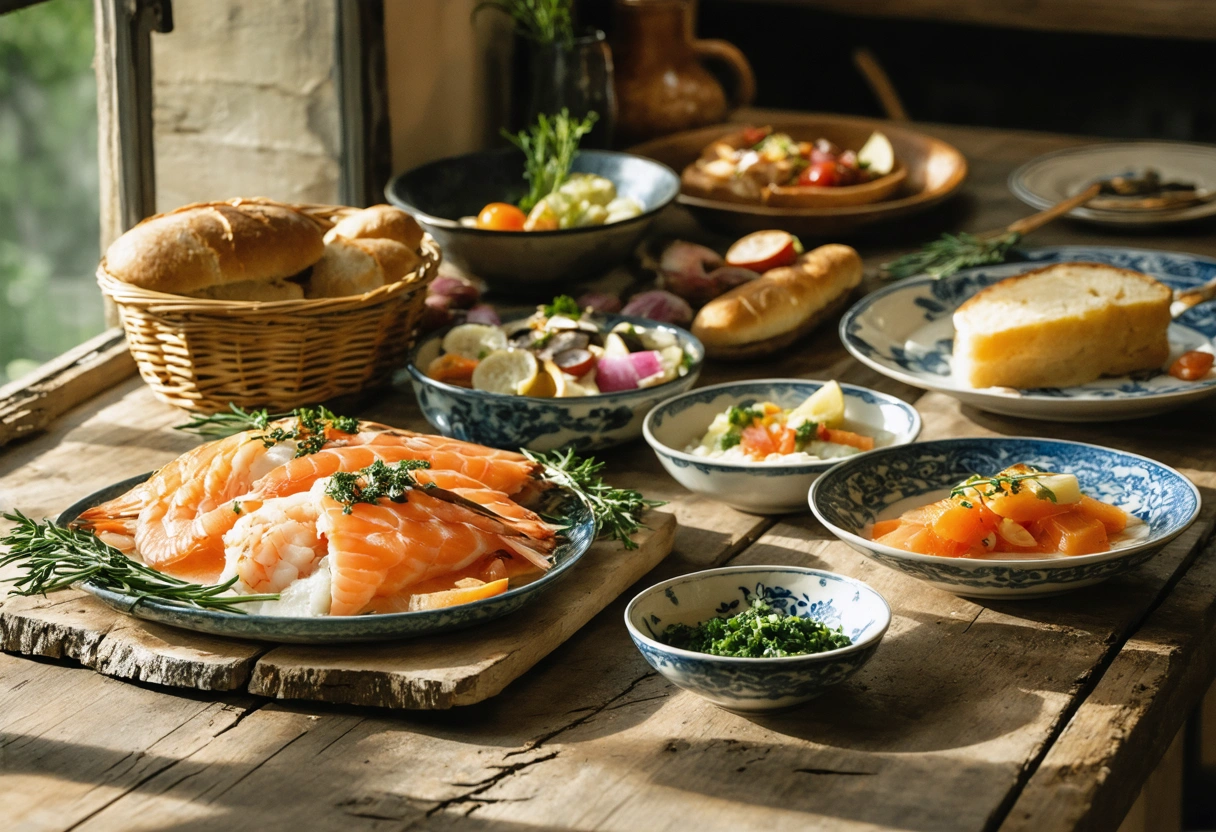
Ask a Canadian what Canadian food is, and you will typically get either a reference to poutine or a thoughtful silence. Both responses are instructive.
The poutine answer is accurate as far as it goes. Quebec's contribution to the North American food canon — cheese curds, fries, gravy — has achieved a kind of national status that its humble origins in rural Quebec cheese shacks in the 1950s could not have anticipated. It appears on menus from Halifax to Victoria, in versions ranging from faithful to inventive to questionable, and its cultural weight has come to serve as a kind of national food shorthand.
But poutine cannot carry the full weight of Canadian cuisine, because Canadian cuisine is not a single thing. It is an assemblage of regional traditions, Indigenous food knowledge, immigrant influences, and local ingredients that express themselves differently depending on where in the country you are standing.
The thoughtful silence in response to the question is also correct: Canadian cuisine is genuinely harder to describe than the food cultures of France, Italy, or Japan, precisely because it has never been organised around a single tradition. That complexity — once experienced as a deficit, a lack of identity — is increasingly understood as an asset.
Atlantic Canada: The Seafood Tradition
The coastal provinces of Atlantic Canada — New Brunswick, Nova Scotia, Prince Edward Island, and Newfoundland and Labrador — share a food culture anchored in the sea. The cold, clean waters of the North Atlantic produce some of the finest shellfish and fish in the world, and the Atlantic food tradition has developed around this abundance in ways that have been refined over generations.
The lobster of the Gulf of St. Lawrence and the Bay of Fundy is the most celebrated product, and the lobster suppers that operate in church halls across Prince Edward Island and Nova Scotia represent a particular form of regional hospitality — long tables, communal serving, lobster cooked simply and eaten with butter — that resists the gentrification of the food experience in a way that is itself culturally expressive.
PEI's oysters — particularly the Malpeque variety, which develops its distinctive briny flavour in the cold, nutrient-rich waters of Malpeque Bay — have an international reputation among shellfish connoisseurs. Newfoundland has its own food traditions: salt cod, flipper pie (seal flipper, now eaten mainly for tradition rather than subsistence), scrunchions (rendered salt pork fat), and a baked goods culture centred on toutons (fried bread dough) and figgy duff (a boiled pudding).
Quebec: A Cuisine with Historical Depth
Quebec's food culture has more historical depth than any other Canadian regional cuisine, reflecting the centuries of French settlement that produced a coherent culinary tradition before Canada existed as a country.
The traditional Quebec menu — tourtière (meat pie), sugar pie, pea soup, ragoût de pattes (pig's feet stew), baked beans — reflects the cooking of rural French Canadian communities surviving through harsh winters with available local ingredients. These dishes remain present in Quebec homes and restaurants, sometimes in updated interpretations and sometimes in faithful reproductions.
The contemporary Montreal food scene — which has developed an international reputation for its combination of French culinary technique, immigrant influence, and genuine bohemian creativity — represents a different face of Quebec food culture. The city's bagel tradition (the Montreal bagel, baked in wood-fired ovens and sweeter than the New York style, is genuinely distinct), its smoked meat tradition, and the inventiveness of its contemporary restaurant culture all contribute to a food environment that rewards serious attention.
The Prairies: Wheat, Beef, and Indigenous Traditions
Prairie food culture is often reduced to steak and wheat, which understates both the quality of those ingredients and the complexity of the regional food landscape. The beef produced in Alberta — in particular, the grain-fed beef that has developed a quality reputation among chefs and butchers — is genuinely excellent. The wheat produced in Saskatchewan and Manitoba is among the highest-protein bread wheat in the world, responsible for the quality of Canadian flour exports.
But Prairie food culture is also shaped by its Indigenous traditions — the use of bison, bannock, Saskatoon berries, wild rice from northern lakes, and other ingredients that were central to Indigenous food systems long before European settlement. The contemporary revival of Indigenous food knowledge, including the emergence of restaurants and catering operations focused on Indigenous Canadian ingredients and techniques, is reshaping how Prairie food culture presents itself.
British Columbia: Pacific Rim and Forest Abundance
British Columbia's food culture reflects both its geography and its demographics. The province's Pacific coast produces extraordinary seafood — wild Pacific salmon, Dungeness crab, spot prawns, halibut — that forms the foundation of a regional cuisine with connections to both Indigenous Pacific Northwest traditions and the Japanese and other Asian culinary traditions that have been part of coastal BC life for over a century.
The Okanagan Valley, with its combination of long growing seasons and microclimates suitable for wine grapes, tree fruits, and diverse vegetables, has developed into one of Canada's most interesting agricultural regions. The food and wine culture of the valley has matured significantly, with farm-to-table restaurants, artisan producers, and a growing hospitality infrastructure that makes the region worth visiting specifically for its culinary identity.
Vancouver's food scene reflects the city's demographic diversity in a way that is unusual even by the standards of Canadian cities. The combination of Chinese, Japanese, Korean, South and Southeast Asian, and increasingly diverse culinary traditions, overlaid on a strong local ingredient base, produces a dining landscape of genuine depth and variety.
What Canadian Cuisine Is Becoming
The most interesting development in Canadian food culture over the past two decades is not the emergence of a single national cuisine — that has not happened, and probably will not — but the growing self-confidence with which regional and Indigenous food traditions are being valued, studied, and shared.
Statistics Canada data on food consumption and spending shows growing interest among Canadians in local and regional food sources, a trend that has supported the expansion of farmers' markets, community-supported agriculture, and direct-to-consumer food production across the country.
The country's food story, like the country itself, is still being written. What is emerging is something more interesting than a national dish: a set of regional food cultures that are increasingly confident about what they are and what they offer.
EstateVodka covers food, culture, and everyday life across Canada.
Content on EstateVodka may include sponsored material. See our Disclaimer and Privacy Policy. This content is for general informational purposes only and does not constitute professional advice.