Between Generations: How Canadian Communities Are Navigating Change
By Sophie Clarke · · 8 min read
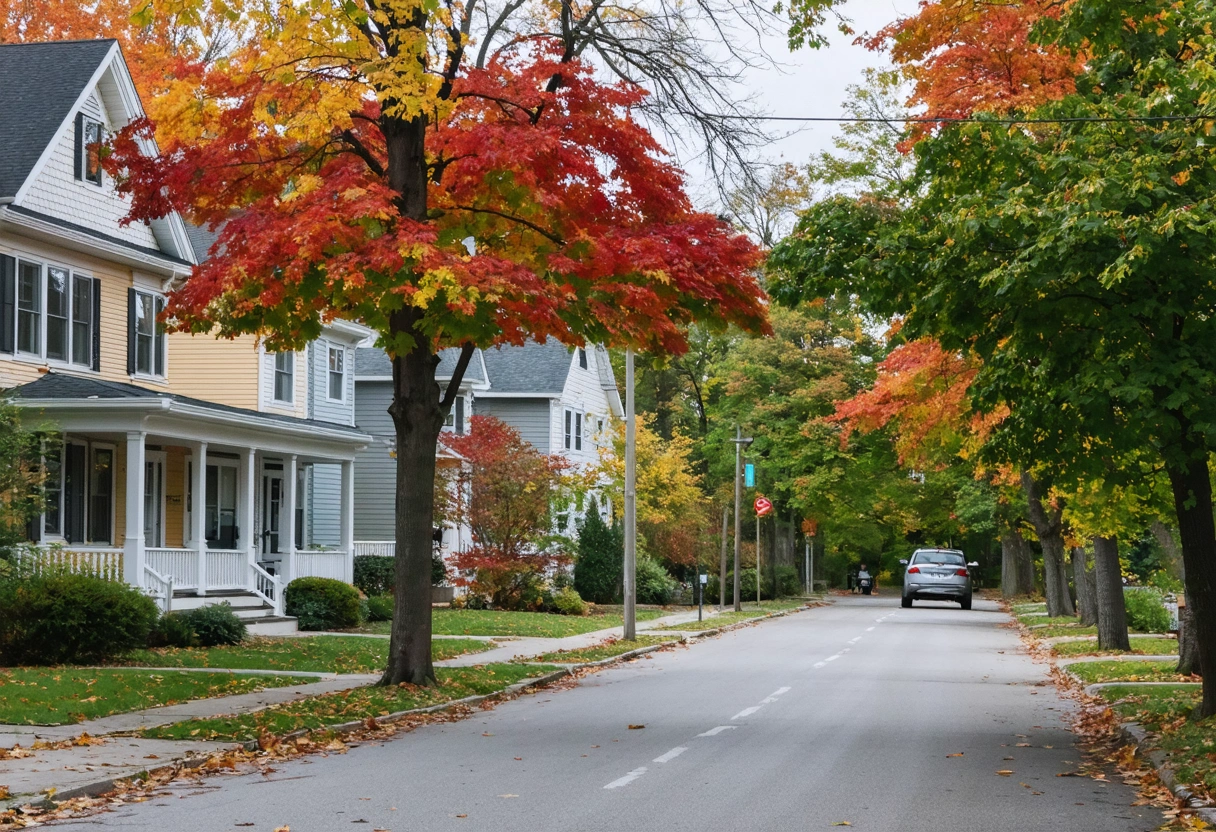
The street looks much the same as it did thirty years ago. But the people living on it, and the terms on which they inhabit the neighbourhood, have changed in ways that are not immediately visible from the sidewalk.
The neighbourhood in question could be almost any established residential street in a Canadian city — Winnipeg, Halifax, Hamilton, Victoria. The physical fabric is continuous: the same housing stock, the same mature trees, the same rhythm of morning traffic. But spend time with the people who live there and you start to understand that the generational composition, and the community dynamics that flow from it, have shifted significantly.
This is the less-photographed face of demographic change in Canada. Public attention tends to focus on the aggregate statistics — the ageing population, the declining birth rate, the contribution of immigration to population growth. These are real and important trends, well-documented by Statistics Canada. But the experience of generational change plays out at the neighbourhood level, in the small decisions and interactions that constitute community life, in ways that the aggregate data can only gesture toward.
The Ageing Neighbourhood
In many established Canadian residential areas, the population has aged in place. Houses bought by young families in the 1970s and 1980s are still occupied by their original purchasers, now in their 70s and 80s. The neighbourhood has aged with them.
This pattern creates both strengths and pressures. Long-established residents carry deep knowledge of a place — its history, its character, the informal norms that shape how neighbours relate to one another. This institutional memory has genuine value. Neighbourhoods with strong long-term resident communities often have more active informal social networks, more robust expectations of mutual aid, and more resistance to the kind of rapid character change that can be disorienting to existing communities.
But ageing in place also creates challenges. An older population has different needs from public infrastructure — walkability, accessible transit, healthcare proximity — that not all established neighbourhoods can provide. When residents who have lived in a community for decades face the transition to assisted living or move to be closer to family, the social networks they anchored dissolve faster than they can be rebuilt.
The Arrival of New Households
When those long-established homes do turn over, they are often purchased by younger households facing a dramatically different economic reality than their predecessors. The relationship between incomes and housing costs in most Canadian cities has shifted substantially over the past two decades, a shift documented extensively in research from the Canada Mortgage and Housing Corporation.
For younger households who have been able to enter established neighbourhoods, the experience of community often differs from what their older neighbours knew. Longer commutes, more demanding work schedules, the time pressures of early parenthood, and the adjustment to unfamiliar neighbourhood norms all affect the pace and depth of community engagement.
The generational difference in how community is built is real, and it is sometimes experienced as disconnection — older residents who remember when everyone on the street knew each other well, newer arrivals who are friendly but rarely available for the extended social investment that neighbourhood community once required.
What Younger Canadians Are Building Instead
It would be a mistake to read this change simply as loss. Younger Canadians are not absent from community life — they are building it differently. Research on social connection among younger adults shows strong investment in friendship networks, a high degree of engagement with digital community forms, and growing interest in intentional forms of neighbourhood connection.
The emergence of neighbourhood social platforms, community gardens, block parties organised through social apps, and mutual aid networks during periods of crisis (the COVID-19 period is the most recent example) all reflect active community-building impulses among younger Canadians. These forms may look different from the bowling leagues and church socials of previous generations, but they are genuine social infrastructure.
What is different is the optionality. Previous generations of community life operated partly on the assumption that neighbours were connected because proximity made connection unavoidable. Contemporary urban and suburban life offers more exit options — which means that the community that forms is, to a greater degree, the community that people actively choose.
Immigration and the Changing Neighbourhood
In many urban Canadian neighbourhoods, generational change is inseparable from demographic change driven by immigration. Canada's immigration levels — among the highest per capita in the world — are reshaping neighbourhood populations in cities across the country, particularly in the major metropolitan areas.
This demographic shift is, in aggregate, positive for communities: new arrivals bring different cultural knowledge, entrepreneurial energy, and social capital that renews the neighbourhood fabric. But the transition also requires genuine investment in the social infrastructure that enables integration — language access, community gathering spaces, institutions that can serve a diverse and changing population.
Communities that have invested in this infrastructure tend to have smoother transitions. Those that have not — or that have expected new arrivals to adapt without reciprocal accommodation — have experienced more friction.
The Legibility of Change
One recurring theme in conversations about generational change in Canadian communities is the question of legibility — the degree to which the change unfolding around residents is visible and comprehensible to them.
For older residents watching their neighbourhood change, the transition can be disorienting even when it is, on balance, positive. Familiar landmarks close. The social composition shifts. The informal norms that once governed community behaviour are no longer universally shared. This disorientation is not simply nostalgia — it reflects a genuine loss of the social knowledge that makes community feel like home.
For newer residents, the reverse can be true: arriving in a neighbourhood with an established character that was shaped without their participation, navigating informal norms they were not party to forming, building connections with longer-term residents who may be welcoming or resistant, or simply unavailable.
The communities that seem to navigate these transitions most successfully are those that find ways to make the change legible — through communication, through shared projects, through deliberate efforts to connect different cohorts of residents. This is not complicated, but it requires sustained attention and a willingness to invest in community as a genuine priority rather than a side effect of proximity.
The street still looks the same. But it takes more work now — more deliberate, chosen work — to make it feel like a community. That is not, in itself, a failure. It is the challenge of the moment.
EstateVodka covers society, community, and everyday life across Canada.
Content on EstateVodka may include sponsored material. See our Disclaimer and Privacy Policy. This content is for general informational purposes only and does not constitute professional advice.