Eight Hidden Gems in British Columbia Worth the Journey
By Sophie Clarke · · 8 min read
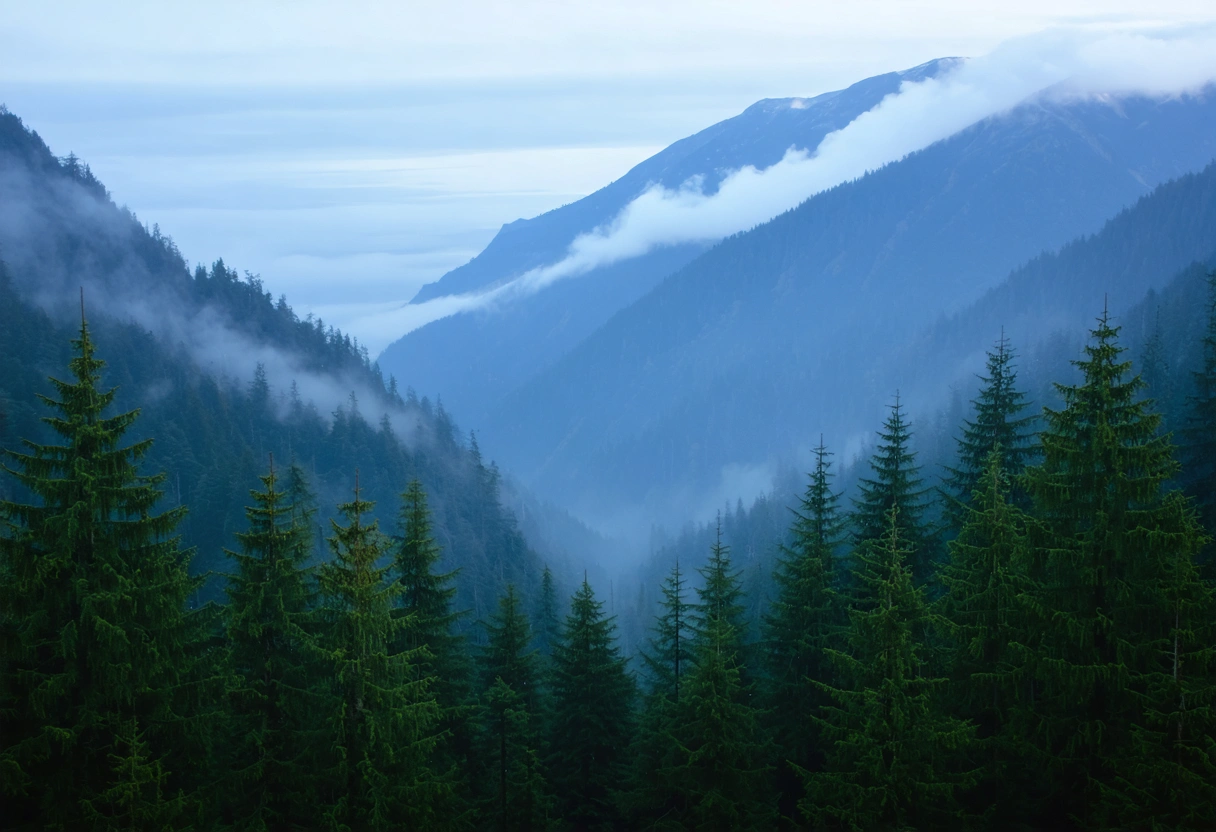
British Columbia's most memorable experiences are rarely found at the first stop on the itinerary.
British Columbia receives more than its share of international attention — Vancouver's cosmopolitan appeal, Whistler's ski reputation, the Okanagan's wine country — and this attention is deserved. But the province is vast, internally diverse, and in its less-visited corners, extraordinary in ways that the popular destinations can only gesture toward. These eight destinations reward the extra distance.
1. The Sunshine Coast — Between Howe Sound and Desolation Sound
The Sunshine Coast — the strip of coast running north from Vancouver that is accessible only by ferry or floatplane, without any road connection to the rest of the provincial highway system — offers a version of coastal British Columbia that feels genuinely separate from the mainland.
Powell River, the Sunshine Coast's largest town, has a strong arts community built partly around a growing population of people who moved there from urban centres seeking a different pace. The Salish Sea Marine Trail, a water trail extending along the coast for several hundred kilometres, is navigable by sea kayak and provides access to stretches of coastline that see very few visitors. The historic Powell River townsite, a planned company town now designated a National Historic District of Canada, is architecturally unlike anything else in the province.
The ferry crossing itself — or the floatplane journey from downtown Vancouver — sets the tone. The Sunshine Coast operates on its own schedule.
2. Haida Gwaii — The Islands at the Edge of the World
Haida Gwaii, the archipelago off BC's north coast formerly known as the Queen Charlotte Islands, is among the most remote and extraordinary destinations in Canada. The traditional territory of the Haida Nation, it is accessible by air or by the BC Ferries service from Prince Rupert (itself a journey).
Gwaii Haanas National Park Reserve, which protects the southern portion of the archipelago, is accessible only by guided trip or self-guided expedition, with permit requirements. The park contains one of the most significant concentrations of standing totem poles and cultural sites in the world, and the marine environment — humpback whales, orca, sea lions — is exceptional. The Haida Heritage Centre at Kay Llnagaay in Skidegate provides extraordinary context for those travelling to the region.
This is not a destination for a quick trip. It rewards time.
3. The Chilcotin Plateau and Chilko Lake
The Chilcotin — the high plateau west of Williams Lake, accessible via Highway 20 — is one of the least-visited significant landscapes in British Columbia. It is a region of grasslands, ponderosa pine forests, and dramatic basalt canyons, with a ranching culture that feels genuinely distinct from both the coastal and Rocky Mountain versions of BC identity.
Chilko Lake, reached by a long and initially challenging road, is one of the largest natural alpine lakes in Canada at high elevation — the colour of the water, fed by glacial runoff, achieves the kind of impossible turquoise that normally requires digital enhancement to reproduce. The surrounding wilderness supports grizzly bear and wolf populations that are rarely encountered in more accessible areas.
4. Nelson — The Kootenays' Cultural Capital
Nelson, situated on the west arm of Kootenay Lake in the West Kootenays, has long been known to those who know it and overlooked by those who don't. A former silver-mining boom town with an intact Victorian commercial district — one of the best-preserved in Western Canada — it has evolved into a community with a strong arts scene, independent businesses, and a demographic mix that reflects decades of attracting people who wanted to live differently.
The surrounding landscape — lakes, mountains, wilderness — provides year-round outdoor access. The Whitewater Ski Resort is small by national standards and consistently produces snow conditions that attract devotees from across the province. The summer hiking in the region is extraordinary and comparatively un-crowded.
5. The Stikine River Country
The Stikine River, flowing from the BC interior to the coast near Wrangell, Alaska, runs through one of the largest relatively intact temperate ecosystems in North America. The Stikine River Recreational Area, combined with the adjacent Spatsizi Plateau Wilderness Provincial Park, represents a scale of wilderness that has few equivalents.
This is genuinely remote travel, requiring either floatplane access or a multi-day river journey. The wildlife — moose, caribou, Stone sheep, bears — is extraordinary, and the river canyon section below Telegraph Creek produces scenery of a scale and drama that is difficult to convey in photographs.
6. Salt Spring Island — The Gulf Islands' Creative Heart
The Gulf Islands, scattered between Vancouver Island and the mainland in the Salish Sea, are individually distinctive. Salt Spring is the most visited and the most diverse, combining an active arts community (the Saturday Market in Ganges is a genuine institution) with agricultural land, forests, and coast that reward slower exploration.
The island is accessible by ferry from both Tsawwassen (on the mainland) and Swartz Bay (near Victoria), making it viable as a multi-day stop on either a mainland or Vancouver Island itinerary. The combination of local food culture, artists' studios, and landscape makes it more rewarding than the other Gulf Islands for those who want more than pure isolation.
7. Prince Rupert — Gateway to the North Coast
Prince Rupert, the port city at the northern end of Highway 16 on BC's north coast, is more often a transit point than a destination — but it deserves more time than most travellers give it. The Museum of Northern British Columbia has one of the stronger Indigenous art collections in the province. The Khutzeymateen Grizzly Bear Sanctuary, accessible by boat or floatplane from Prince Rupert, is the only protected area in Canada established specifically to preserve grizzly bear habitat, and guided boat tours in spring and early summer offer reliable wildlife viewing.
The city itself, rebuilt after a fire in 1914, has interesting residential architecture and a working waterfront that preserves something of the industrial scale that shaped the north coast.
8. The Peace River Country — Northern BC's Other World
The Peace River region, in northeastern BC, is geographically and culturally distinct from the rest of the province — more Prairie than mountain, with an agricultural character that reflects the mixed farming heritage of the Peace Block. Hudson's Hope, at the site of the W.A.C. Bennett Dam, is small but has a disproportionately interesting local museum given its size, with fossil collections from the Peace River area that include Cretaceous-era material of genuine scientific interest.
The northern BC boreal in winter — the sky, the scale of the cold, the particular quality of the light — is not comfortable travel, but it is unforgettable for those equipped for it.
EstateVodka covers travel, culture, and everyday life across Canada. Browse our full archive for more on Canadian destinations.
Content on EstateVodka may include sponsored material. See our Disclaimer and Privacy Policy. This content is for general informational purposes only and does not constitute professional advice.